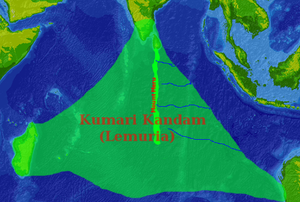
தமிழ் தோன்றிய இடம் குமரிக்கண்டம் அல்லது குமரிமாந்தனின் இலமுரியாக்கண்டம்
தமிழனின் பிறப்பிடமும் தமிழ் மொழியின் பிறப்பிடமும் குமரிக்கண்டம் தான். அக்கண்டம் நீரில் மூழ்கிப் போனது. முச்சங்க வரலாற்றாலும், சிலப்பதிகார உரைகள் மூலம் தெரியலாம். திரு. பி.டு. சீனிவாசய்யர், திரு சேசையர் திரு. இராமச்சந்திர தீட்சிதர் போன்றோரின் வரலாற்று நூல்கள் வாயிலாகவும், தேவநேயப் பாவாணர் எழுதிய “முதற்தாய் மொழி” வாயிலாகவும், நாம் நன்கறிகிறோம். தமிழன் தோன்றிய இடம் குமரிக்கண்டம், கையாண்ட மொழி தமிழ் திராவிட மொழியாகும். பல்லாயிரம் ஆண்டுகளுக்குப் பின் படிப்படியாக வளர்ந்த தமிழும், தமிழனும், புகழின் உச்சக்கட்டம் எட்டினர். பழந்தமிழ் நாட்டை உலகிற்குச் சுட்டிக் காட்டினர்.
குமரிக்கண்டமும் அதன் எல்லைகளும்
பழந்தமிழ் நாடாகிய குமரிக் கண்டம் அளவில் மிகப் பெரிதாக பரவியிருந்தது. ஆஸ்திரேலியாவையும் தென்னாப்பிரிக்காவையும் இந்தியாவையும் இணைத்துக் கொண்டிருந்த பெரும் நிலப்பரப்பே குமரிக் கண்டம் அல்லது பழந்தமிழ் நாடு அல்லது இலமூரியா கண்டம் என்கிறார் ஹிராடடஸ், இக்கருத்தை பேரறிஞர்கள் திலு.ஓல்டுகாம், திரு. எக்கேல், திரு. கிளேற்றர், திரு. கட்டு எலியட், திரு. தேவநேயப் பாவாணர் போன்றோர் ஏகமனதாக ஏற்றுக் கொண்டனர். மேலும் ஹிராடடஸ் அவர்கள் குமரிக் கண்டத்தின் எல்லையைக் குறிப்பிட்டுள்ளார்.
1. தொலைமேற்கில் – கிரேக்க நாடு
2. மேற்கில் – எகிப்து மற்றும் ஆப்பிரிக்கா
3. வடமேற்கில் – மென் ஆப்பிரிக்கா
4. தொலை கிழக்கில் – சீன நாடு
5. கிழக்கில் – பர்மா, மலேசியா, சிங்கப்பூர்
6. தெற்கில் – நீண்ட மலைத் தொடர்
இம்மலைத் தொடர் ஆஸ்திரேலியாவில் தொடங்கி தென்னாப்பிரிக்காவில் முடிவடைகிறது என்பதை மனதில் கொள்ள வேண்டும். இவற்றின் மையத்தில் அமைந்த மிகப் பெரிய கண்டமே குமரிக் கண்டம் அல்லது பழந்தமிழ் நாடு அல்லது இலமூரியா கண்டமாகும்.
இக்கண்டத்தை பதினான்கு மாநிலங்களாக அதாவது ஏழு தெங்கு நாடு, ஏழு பனை நாடு என பிரித்திருந்தனர். அந்நாட்டில் வாழ்ந்தவன் தான் தமிழன். அவன் கையாண்ட நாகரிகம்தான் திராவிட நாகரிகம். அவனுடைய வரலாறும் நாகரிகமும் தான் உலகிலேயே முதன்மை வாய்ந்தது. இவனுடைய மொழி தமிழ், தமிழர்கள் தமிழ்நாட்டிலிருந்து கடல் வழியாகவும், தரை மார்க்கமாகவும் உலகெங்கும் சென்று குடியேற்றங்களை அமைத்து தமிழ் மொழியையும், தமிழ்ப் பண்பாட்டையும், தமிழ்க் கலாச்சாரத்தையும் பாரெங்கும் பரப்பானர் என்பதே உண்மை. இதற்குச் சான்றாக பினீசியர்களின் நாணயங்களும், கல்வெட்டுக்களும் உதவுகின்றன.
Kumari Kandam (Tamil:குமரிக்கண்டம், Kumarikkaṇṭam) is the name of a supposed sunken landmass referred to in existing ancient Tamil literature. It is said to have been located in the Indian Ocean, to the south of present-day Kanyakumari district at the southern tip of India.
References in Tamil literature
There are scattered references in Sangam literature, such as Kalittokai 104, to how the sea took the land of the Pandiyan kings, upon which they conquered new lands to replace those they had lost.[1] There are also references to the rivers Pahruli and Kumari, that are said to have flowed in a now-submerged land.[2] The Silappadhikaram, a 5th century epic, states that the "cruel sea" took the Pandiyan land that lay between the rivers Pahruli and the mountainous banks of the Kumari, to replace which the Pandiyan king conquered lands belonging to the Chola and Chera kings (Maturaikkandam, verses 17-22). Adiyarkkunallar, a 12th century commentator on the epic, explains this reference by saying that there was once a land to the south of the present-day Kanyakumari, which stretched for 700 kavatam from the Pahruli river in the north to the Kumari river in the south. As the modern equivalent of a kavatam is unknown, estimates of the size of the lost land vary from 1,400 miles (2,300 km) to 7,000 miles (11,000 km) in length, to others suggesting a total area of 6-7,000 square miles, or smaller still an area of just a few villages.[3]
This land was divided into 49 nadu, or territories, which he names as seven coconut territories (elutenga natu), seven Madurai territories (elumaturai natu), seven old sandy territories (elumunpalai natu), seven new sandy territories (elupinpalai natu), seven mountain territories (elukunra natu), seven eastern coastal territories (elukunakarai natu) and seven dwarf-palm territories (elukurumpanai natu). All these lands, he says, together with the many-mountained land that began with KumariKollam, with forests and habitations, were submerged by the sea.[2] Two of these Nadus or territories were supposedly parts of present-day Kollam and Kanyakumari districts.
None of these texts name the land "Kumari Kandam" or "Kumarinadu", as is common today. The only similar pre-modern reference is to a "Kumari Kandam" (written குமரிகண்டம், rather than குமரிக்கண்டம் as the land is called in modern Tamil), which is named in the medieval Tamil text Kantapuranam either as being one of the nine continents,[4] or one of the nine divisions of India and the only region not to be inhabited by barbarians.[5] 19th and 20th Tamil revivalist movements, however, came to apply the name to the territories described in Adiyarkkunallar's commentary to the Silappadhikaram.[6] They also associated this territory with the references in the Tamil Sangams, and said that the fabled cities of southern Madurai and Kapatapuram where the first two Sangams were said to be held were located on Kumari Kandam.[7]
In the late 19th and early 20th centuries, Tamil nationalists came to identify Kumari Kandam with Lemuria, a "lost continent" posited in the 19th century to account for discontinuities in biogeography. In these accounts, Kumari Kandam became the "cradle of civilization", the origin of human languages in general and the Tamil language in particular.[8] These ideas gained notability in Tamil academic literature over the first decades of the 20th century, and were popularized by the Tanittamil Iyakkam, notably by self-taught Dravidologist Devaneya Pavanar, who held that all languages on earth were merely corrupted Tamil dialects. R. Mathivanan, then Chief Editor of the Tamil Etymological Dictionary Project of the Government of Tamil Nadu, in 1991 claimed to have deciphered the still undeciphered Indus script as Tamil, following the methodology recommended by his teacher Devaneya Pavanar, presenting the following timeline (cited after Mahadevan 2002): Sumathi Ramaswamy's book, The Lost Land of Lemuria: Fabulous Geographies, Catastrophic Histories (2004) is a theoretically sophisticated[citation needed] study of the Lemuria legends that widens the discussion beyond previous treatments[citation needed], looking at Lemuria narratives from nineteenth-century Victorian-era science to Euro-American occultism, colonial, and post colonial India. Ramaswamy discusses particularly how cultures process the experience of loss.
Modern revival
Popular culture
[edit] Loss and imagination